
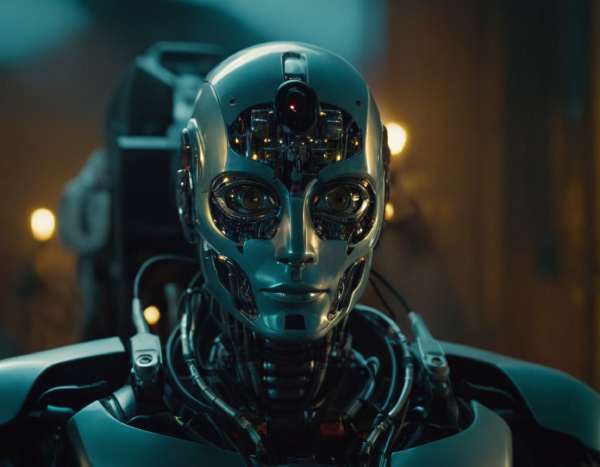
What it is
Imagine a world where robots are an integral part of our daily lives, assisting us with household chores, providing companionship, and even helping us with medical care. This is the vision behind designing robots for everyday life, a field that aims to create robots that are not only intelligent but also intuitive, user-friendly, and adaptable to our needs.
These robots are designed to be more than just machines; they are meant to be our partners, our friends, and our caregivers. They will learn our habits, our preferences, and our needs, and use this knowledge to provide us with personalized assistance. From helping us with grocery shopping to providing emotional support, these robots will be an extension of ourselves, making our lives easier, more convenient, and more enjoyable.
Why it matters
Designing robots for everyday life matters because it has the potential to revolutionize the way we live, work, and interact with each other. It can help us address some of the world's most pressing challenges, such as an aging population, a shortage of caregivers, and a growing need for healthcare services.
By creating robots that can assist us with daily tasks, we can free up time for more important things, like spending time with loved ones, pursuing hobbies, and contributing to our communities. We can also use these robots to provide support to people with disabilities, elderly individuals, and those in need of medical care.
Where you’ll see it first
You'll see the first designs of robots for everyday life in various settings, such as:
* Homes: Robots will be integrated into our living spaces, helping with household chores, cooking, and cleaning. * Healthcare facilities: Robots will assist with patient care, providing emotional support, and helping with medical procedures. * Public spaces: Robots will be used in public areas, such as shopping malls, airports, and parks, to provide information, assistance, and entertainment. * Educational institutions: Robots will be used in schools and universities to teach students about science, technology, engineering, and mathematics (STEM) subjects.
The trade-offs and worries
While designing robots for everyday life has many benefits, there are also some trade-offs and worries to consider:
* Job displacement: As robots take over some tasks, there is a risk of job displacement for human workers. * Dependence on technology: We may become too reliant on robots and lose some of our skills and abilities. * Safety and security: There is a risk of robots malfunctioning or being hacked, which could lead to accidents or security breaches. * Social isolation: We may spend too much time interacting with robots and lose touch with human connections.
What to watch next
As we move forward in designing robots for everyday life, we can expect to see:
* More advanced artificial intelligence (AI) capabilities, such as machine learning and natural language processing. * Increased use of sensors and data analytics to improve robot performance and decision-making. * Development of more human-like robots, with advanced facial recognition, speech recognition, and emotional intelligence. * Integration of robots with other technologies, such as the Internet of Things (IoT) and 5G networks.
Conclusion
Designing robots for everyday life is a new frontier in technology that has the potential to revolutionize the way we live, work, and interact with each other. As we move forward in this field, we must be mindful of the trade-offs and worries, but also be excited about the possibilities and opportunities that lie ahead. The future of robotics is bright, and it's up to us to shape it in a way that benefits humanity.