
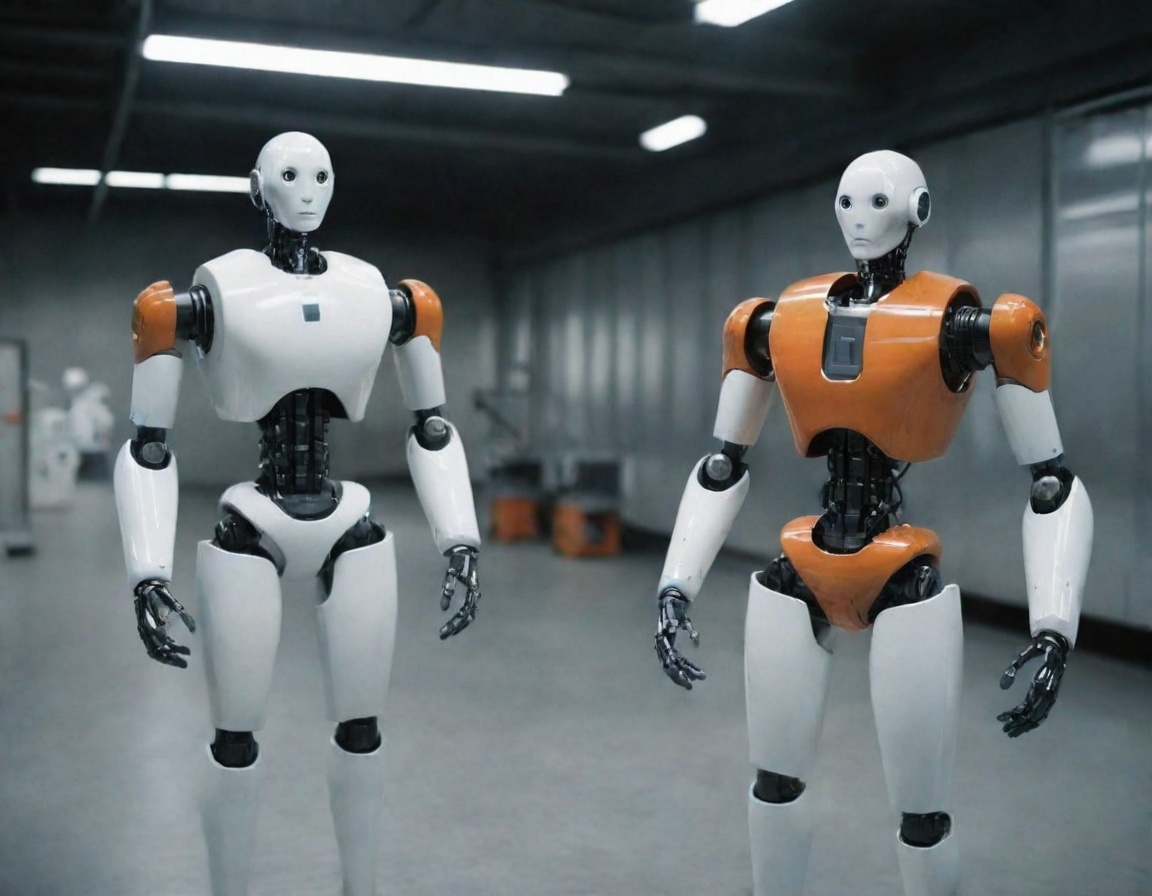
What it is
Learning from humans is a fundamental aspect of artificial intelligence, particularly in the realm of robotics. It involves the ability of robots to observe, understand, and replicate human behavior, allowing them to adapt to new situations and improve their performance over time. This process is often referred to as "human-robot interaction" or "human-robot collaboration."
There are several ways in which robots can learn from humans, including:
* **Observation**: Robots can learn by observing human behavior, such as watching a human perform a task and then replicating it. * **Imitation**: Robots can learn by imitating human behavior, such as mimicking a human's movements or speech patterns. * **Feedback**: Robots can learn by receiving feedback from humans, such as corrections or suggestions for improvement. * **Social learning**: Robots can learn by interacting with humans in a social setting, such as learning from a human's emotional cues or social norms.
Why it matters
Learning from humans is essential for the development of robots that can interact with humans in a natural and intuitive way. It allows robots to:
* **Improve their performance**: By learning from humans, robots can improve their performance in tasks such as assembly, navigation, and customer service. * **Increase their adaptability**: Robots that can learn from humans can adapt to new situations and environments, making them more versatile and useful. * **Enhance their safety**: By learning from humans, robots can reduce the risk of accidents and injuries, making them safer to work with. * **Provide better customer service**: Robots that can learn from humans can provide more personalized and effective customer service, leading to increased customer satisfaction and loyalty.
Where you’ll see it first
Learning from humans is already being implemented in various industries, including:
* **Manufacturing**: Robots are being used to learn from humans in assembly lines, allowing them to improve their performance and efficiency. * **Healthcare**: Robots are being used to learn from humans in hospitals and clinics, allowing them to provide more effective and personalized care. * **Customer service**: Robots are being used to learn from humans in customer service centers, allowing them to provide more personalized and effective support. * **Education**: Robots are being used to learn from humans in educational settings, allowing them to provide more effective and engaging learning experiences.
The trade-offs and worries
While learning from humans has many benefits, there are also some trade-offs and worries to consider, including:
* **Dependence on human input**: Robots that learn from humans may become dependent on human input and feedback, which can be time-consuming and expensive. * **Bias and error**: Robots that learn from humans may inherit biases and errors from their human trainers, which can lead to inaccurate or unfair outcomes. * **Security risks**: Robots that learn from humans may be vulnerable to security risks, such as hacking or data breaches. * **Job displacement**: Robots that learn from humans may displace human workers, particularly in industries where tasks are repetitive or can be easily automated.
What to watch next
As learning from humans continues to evolve, there are several areas to watch, including:
* **Advances in machine learning**: Improvements in machine learning algorithms and techniques will enable robots to learn from humans more effectively and efficiently. * **Increased use of sensors**: The use of sensors and other technologies will enable robots to gather more data and learn from humans in more nuanced and detailed ways. * **Development of more advanced robots**: The development of more advanced robots with greater capabilities and autonomy will enable them to learn from humans in more complex and dynamic environments. * **Integration with other technologies**: The integration of learning from humans with other technologies, such as natural language processing and computer vision, will enable robots to learn from humans in more comprehensive and effective ways.
Conclusion
Learning from humans is a fascinating and rapidly evolving field that has the potential to revolutionize the way we interact with robots and other machines. As we continue to develop and refine this technology, we must also consider the trade-offs and worries, and work to ensure that robots that learn from humans are safe, effective, and beneficial to society.