
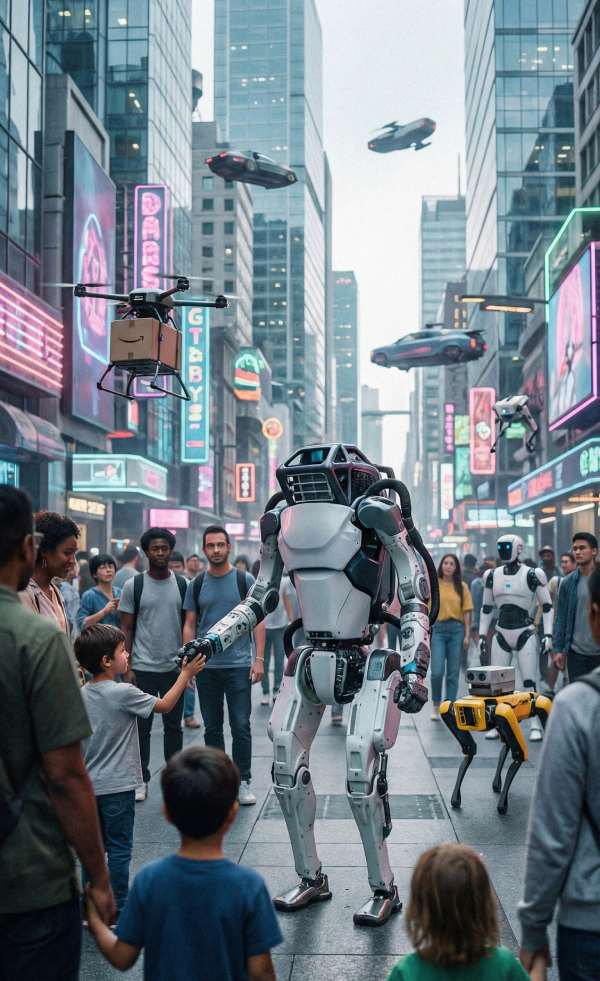
What it is
Human-Robot Collaboration (HRC) is a rapidly evolving field that brings together humans and robots to work together seamlessly, leveraging each other's strengths to achieve complex tasks. This synergy enables robots to learn from humans, adapt to new situations, and even improve their performance over time.
Imagine a factory floor where robots and humans work side by side, each contributing their unique skills to produce high-quality products. In healthcare, robots assist surgeons during operations, while in logistics, robots work alongside humans to pack and ship goods efficiently. HRC is revolutionizing industries by increasing productivity, improving safety, and enhancing overall efficiency.
Why it matters
HRC matters because it has the potential to transform the way we work, live, and interact with technology. By combining human creativity and intuition with robotic precision and speed, we can achieve unprecedented levels of innovation and progress. HRC also addresses the growing need for skilled workers in industries where automation is becoming increasingly prevalent.
As robots take on more responsibilities, humans can focus on higher-level tasks that require creativity, empathy, and problem-solving skills. This shift in focus enables humans to work more efficiently, while robots handle the mundane and repetitive tasks that can be time-consuming and error-prone.
Where you’ll see it first
HRC is already being implemented in various industries, including manufacturing, healthcare, logistics, and transportation. In the manufacturing sector, robots are working alongside humans to assemble complex products, such as cars and electronics. In healthcare, robots are assisting surgeons during operations, while in logistics, robots are helping to pack and ship goods efficiently.
As HRC continues to evolve, we can expect to see its applications expand into new areas, such as education, customer service, and even personal assistance. The possibilities are endless, and the future of HRC looks bright.
The trade-offs and worries
While HRC offers many benefits, there are also concerns about job displacement, safety, and security. As robots take on more responsibilities, there is a risk that humans may lose their jobs or experience a decline in their skills. Additionally, there are concerns about the potential for robots to malfunction or be hacked, which could lead to accidents or security breaches.
To mitigate these risks, it's essential to develop and implement robust safety protocols, as well as to provide training and education programs for workers who may be displaced by automation. By addressing these concerns, we can ensure that HRC is implemented in a way that benefits both humans and robots.
What to watch next
As HRC continues to evolve, we can expect to see significant advancements in areas such as artificial intelligence, machine learning, and robotics. These technologies will enable robots to learn from humans, adapt to new situations, and even improve their performance over time.
We can also expect to see the development of new applications for HRC, such as robots that can assist with tasks in the home, or robots that can provide personal assistance to individuals with disabilities. The possibilities are endless, and the future of HRC looks bright.
Conclusion
Human-Robot Collaboration is the next frontier in robotics, and it has the potential to transform the way we work, live, and interact with technology. By combining human creativity and intuition with robotic precision and speed, we can achieve unprecedented levels of innovation and progress. As we move forward, it's essential to address the trade-offs and worries associated with HRC, but the benefits are clear: a brighter, more efficient, and more productive future for all.