
What it is
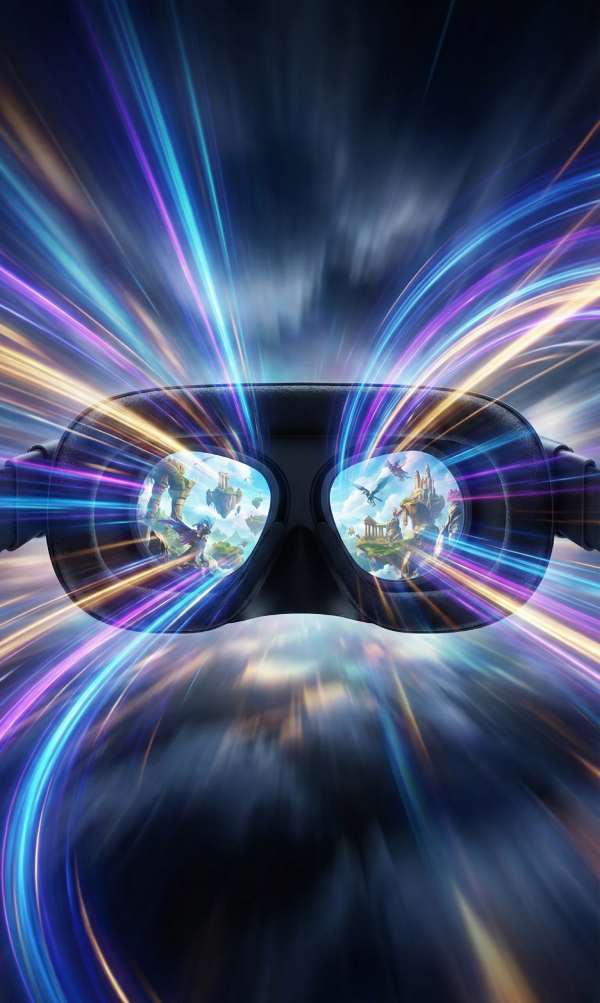
Immersive learning is a type of educational experience that uses Extended Reality (XR) technology to transport students into virtual environments. XR encompasses a range of technologies, including Virtual Reality (VR), Augmented Reality (AR), and Mixed Reality (MR). These technologies allow students to interact with digital objects and environments in a way that simulates real-world experiences.
For example, a student learning about ancient civilizations might use VR to explore a virtual ancient city, complete with digital artifacts and inhabitants. Alternatively, a student learning about anatomy might use AR to see a 3D model of the human body projected onto a real-world surface. These immersive experiences can be more engaging and effective than traditional teaching methods, which often rely on static images and text.
Why it matters
Immersive learning has the potential to revolutionize education by making it more engaging, interactive, and effective. By providing students with hands-on experiences in a virtual environment, educators can help students develop a deeper understanding of complex concepts and retain information better. This can be particularly beneficial for subjects like science, technology, engineering, and mathematics (STEM), where students often struggle to visualize abstract concepts.
Moreover, immersive learning can help bridge the gap between theory and practice, allowing students to apply what they have learned in a real-world context. This can be especially valuable for students who may not have access to hands-on experiences in a physical classroom.
Where you’ll see it first
Immersive learning is already being used in various educational settings, from elementary schools to universities. Some schools have incorporated VR and AR technology into their curricula, while others have created dedicated virtual reality labs or classrooms. Online platforms and educational software companies are also developing immersive learning experiences that can be accessed remotely.
For example, some schools are using VR to teach students about historical events, such as the Holocaust or the American Civil War. Others are using AR to teach students about science and mathematics, such as the structure of the human body or the properties of different materials.
The trade-offs and worries
While immersive learning has many benefits, there are also some trade-offs and worries to consider. One concern is the cost of implementing immersive learning technologies, which can be expensive and may not be feasible for all schools or educational institutions. Another concern is the potential for students to become too engrossed in virtual environments and lose sight of the real world.
Additionally, there are concerns about the potential for bias and stereotyping in immersive learning experiences, particularly if the virtual environments are not representative of diverse cultures and perspectives. Educators must be mindful of these issues and take steps to ensure that immersive learning experiences are inclusive and respectful.
What to watch next
As immersive learning continues to evolve, there are several trends and developments to watch. One area of focus is the development of more affordable and accessible immersive learning technologies, such as lower-cost VR headsets and more user-friendly AR software. Another area of focus is the creation of more diverse and inclusive immersive learning experiences, which can help to promote greater understanding and empathy among students.
Moreover, there is a growing interest in the use of immersive learning for professional development and training, particularly in fields like healthcare and education. This can help to improve the skills and knowledge of educators and healthcare professionals, while also reducing costs and improving outcomes.
Conclusion
Immersive learning is changing the face of education, offering students a more engaging, interactive, and effective way to learn. As this technology continues to evolve, we can expect to see even more innovative and inclusive learning experiences that can help to promote greater understanding and empathy among students. The future of education is immersive, and it's an exciting time to be a part of it.