
What it is
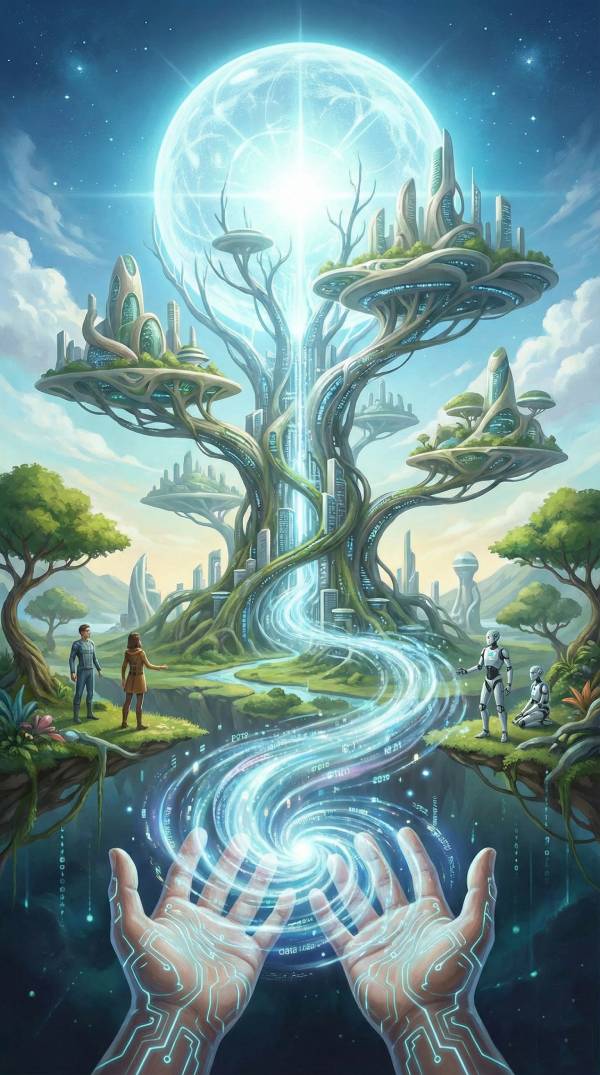
Spatial computing is an emerging technology that enables us to interact with virtual objects and environments in a more immersive and intuitive way. It's a fusion of augmented reality (AR), virtual reality (VR), and the Internet of Things (IoT), allowing us to perceive and interact with digital information in three dimensions. Imagine being able to walk into a virtual room, pick up a virtual object, and manipulate it as if it were real – that's the power of spatial computing.
This technology has the potential to transform various industries, from education and healthcare to entertainment and retail. For instance, medical students can practice surgeries in a virtual environment, while architects can design and visualize buildings in 3D. The possibilities are endless, and spatial computing is poised to revolutionize the way we live, work, and play.
Why it matters
Spatial computing matters because it has the potential to improve our lives in countless ways. By providing a more immersive and interactive experience, it can enhance our understanding and retention of complex information. It can also enable us to communicate more effectively, collaborate more efficiently, and make more informed decisions.
Moreover, spatial computing can help bridge the gap between the physical and digital worlds. It can make our lives more convenient, more enjoyable, and more meaningful. For example, imagine being able to control your home's lighting, temperature, and entertainment systems with just a wave of your hand. That's the kind of seamless integration that spatial computing can provide.
Where you’ll see it first
You'll see spatial computing in various forms and applications, from consumer electronics to industrial settings. It's already being used in gaming, education, and healthcare, and it's likely to become more widespread in the coming years. For instance, smart glasses and head-mounted displays are becoming increasingly popular, allowing users to access virtual information and interact with digital objects in a more immersive way.
You'll also see spatial computing in industrial settings, such as factories and warehouses, where it can be used to improve efficiency, productivity, and safety. For example, workers can use augmented reality glasses to receive instructions and guidance on complex tasks, reducing the risk of errors and accidents.
The trade-offs and worries
While spatial computing has the potential to revolutionize the way we interact with the world around us, there are also some trade-offs and worries to consider. For instance, there are concerns about the impact of spatial computing on our mental and physical health, particularly if we spend too much time in virtual environments. There are also worries about the potential for spatial computing to exacerbate social isolation and loneliness.
Moreover, there are concerns about the ethics of spatial computing, particularly when it comes to issues like data privacy and security. As we become more dependent on spatial computing, we need to ensure that our personal data is protected and that we have control over how it's used.
What to watch next
As spatial computing continues to evolve and mature, there are several trends and developments to watch out for. For instance, the rise of 5G networks and the Internet of Things (IoT) is likely to enable more widespread adoption of spatial computing, particularly in industrial and commercial settings.
You'll also see more emphasis on augmented reality (AR) and virtual reality (VR) experiences, as well as the development of new technologies like haptic feedback and brain-computer interfaces. These technologies have the potential to revolutionize the way we interact with digital information and each other.
Conclusion
Spatial computing is here to change everything, and it's only just beginning to scratch the surface of its potential. As we continue to push the boundaries of what's possible, we'll see new and innovative applications emerge, transforming the way we live, work, and play. The future is bright, and it's going to be a wild ride.