
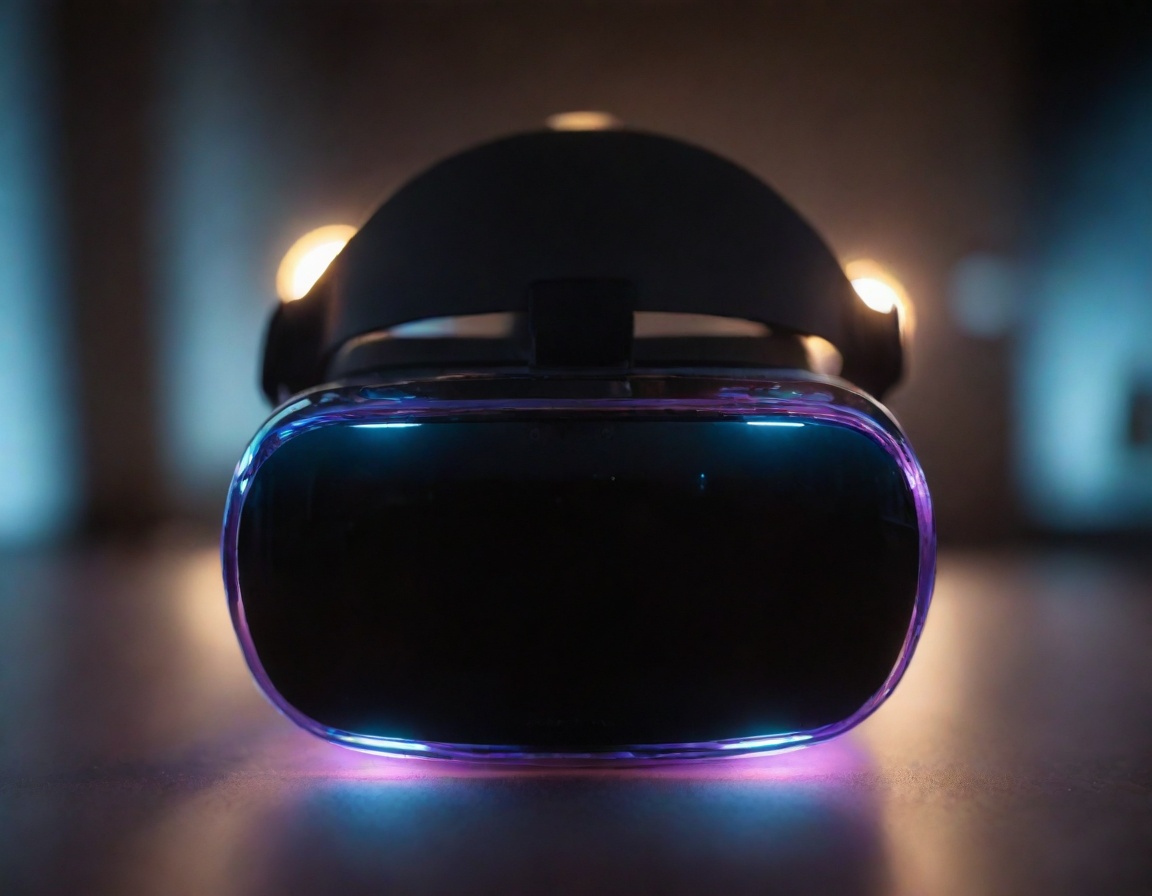
What it is
Virtual reality (VR) in education is an immersive and interactive experience that simulates real-world environments, allowing students to explore and learn in a more engaging and effective way. By wearing a VR headset, students can step into a virtual world that is tailored to their learning needs, making complex concepts more accessible and fun to learn.
Imagine being able to explore the human body, walk through the solar system, or visit historical sites without leaving the classroom. VR in education has the potential to revolutionize the way we learn, making it more interactive, collaborative, and memorable. With VR, students can experience learning in a way that is tailored to their individual needs, learning styles, and abilities.
Why it matters
The traditional classroom model has its limitations, and VR in education offers a solution to many of these challenges. By providing an immersive and interactive experience, VR can increase student engagement, motivation, and retention. It can also help to bridge the gap between theory and practice, making learning more relevant and applicable to real-world situations.
Moreover, VR in education can be particularly beneficial for students who may struggle with traditional teaching methods, such as those with learning disabilities or English language learners. By providing a more interactive and immersive experience, VR can help to make learning more accessible and enjoyable for all students.
Where you’ll see it first
VR in education is already being used in various settings, from elementary schools to universities. Some schools are using VR to teach subjects such as science, history, and language arts, while others are using it to provide training for students with special needs.
For example, some schools are using VR to teach students about fractions by having them build virtual pizzas or cakes. Others are using VR to teach students about historical events by having them walk through virtual recreations of ancient cities.
The trade-offs and worries
While VR in education has many benefits, there are also some trade-offs and worries to consider. One of the main concerns is the cost of VR equipment and software, which can be prohibitively expensive for some schools.
Another concern is the potential for VR to be used as a distraction, rather than a tool for learning. If students are not properly supervised and guided, they may use VR as a way to avoid learning or to engage in other activities.
Additionally, there are also concerns about the potential for VR to exacerbate existing inequalities in education. If only some students have access to VR equipment and software, it could create a new divide between those who have access to these resources and those who do not.
What to watch next
As VR in education continues to evolve, there are several trends and developments to watch. One of the most exciting areas of development is the use of augmented reality (AR) in education, which combines the benefits of VR with the ability to interact with the physical world.
Another area to watch is the development of more affordable and accessible VR equipment and software, which could make it more feasible for schools to adopt VR in education.
Finally, it will be interesting to see how VR in education is used to address some of the most pressing challenges in education, such as teacher shortages and student engagement.
Conclusion
Virtual reality in education has the potential to revolutionize the way we learn, making it more interactive, collaborative, and memorable. As VR continues to evolve and improve, it will be exciting to see how it is used to address some of the most pressing challenges in education. With VR, the future of learning is limitless, and the possibilities are endless.